


Thinking artistic research through interaction with living agents as mycelium
Summercamp – 5-day residential summer workshop
In an era of social fragmentation and climate emergency, the fungal kingdom offers a radical model of survival: connection. Mycelium is the collective body that teaches us to think not s individuals, but as ecosystems in constant exchange.
This thinking has guided the creation of Bioartlab, an open research hub exploring the possibilities of building collaborative communities with mycelium.
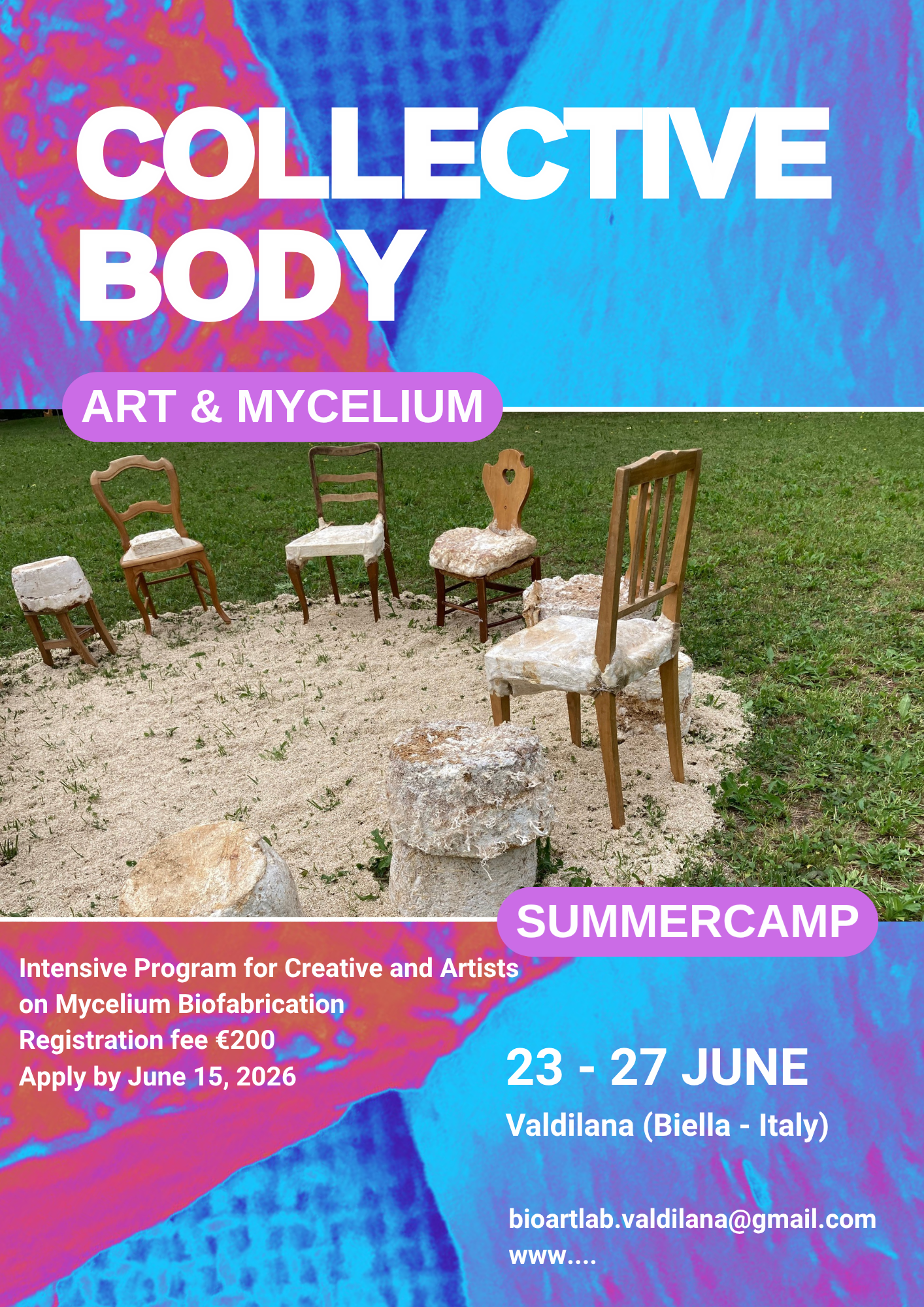
“Collective Body” is a co-creation experience where art meets biology and its real-world interactions. Participants are not observers, but “symbiotic partners” of living organisms, experiencing what it means to design with nature.
- The Summercamp offers 5 intensive days of exchanging reflections, practices, and collective experiments on the theme of artistic research linked to living agents such as mycelia, providing participants with a work plan and tools to continue their research afterward.
- Bioartlab supports each person’s creative work with its knowledge of the context, processes, and biology of the mycelium growth cycle, along with its infrastructure.
- The collective outcome is an ecological, artistic, and collaborative environment made up of individual research and practice threads, to be cultivated over time.
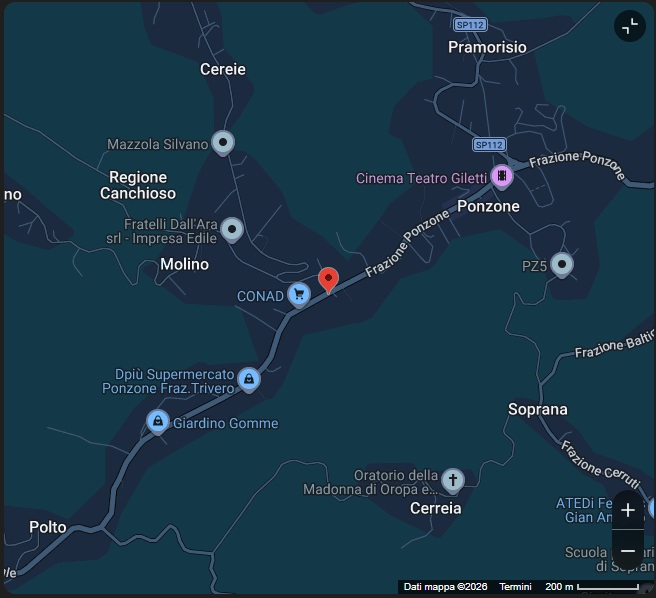
Where: Valdilana Hub, Via Provinciale 268, Valdilana – Frazione Ponzone (Biella)
When: Tuesday 23 to Saturday 27 June 2026
Where to sleep: Parish house (10 euros per night, bring your own sheets and towels)
Where to eat: Collective lunches at the workspace; dinners on your own; it is possible to cook in the parish house
Registration: Fill out the form to secure your spot!
Cost: 200 euros, to be transferred by 15 June (IBAN IT42Z0306909465100000064986)
HIGHLIGHTED
theoretical and ethical aspects. When approaching bioart and biodesign, every artist inevitably has to embrace a shift in their research direction and practices, confronting living partners and tools that not only make autonomous decisions but also demand their own development timelines.Choosing them as work companions also means taking on the implications suggested by their ecosystem (and our relationship with it).
technical aspects. At the foundation, it is necessary to learn the growth process and its variability. But it is equally necessary to find procedures to manage the production and, if needed, stop it. The work, precisely because it is alive, is ephemeral and transforms, seeking to return to decomposed matter available for something else
production aspects. Since mycelium growth cycles are much slower than human organization, Bioartlab proposes working on multiple levels: investigating approaches, learning about problems, and testing on pre-prepared living materials.
programme
- Day 1
The Bioartlab experience, participants’ experiences
The sensitivity of Nature
The laboratory as a studio
Nature’s biodesign and the ecopolitics of artistic action
Mycelium as a platform for assembling and deconstructing matter, and its role in art and society. - Day 2
Principles of mycological biofabrication and growth cycles.
Characteristics, selection, and assembly of growth substrates. - Day 3
Inoculation and preparation of drying and coating systems. - Day 4
First observations and planning of subsequent autonomous phases.
Setting up presentations to share the work done. - Day 5
Open discussion with the public on art & nature & biofabrication. - Expert meetings are planned (in person or remotely; or the “collective body” of participants may visit elsewhere). The full programme will be communicated by the end of May.
With the support of

