


Training
This section brings together a collection of resources designed to support the businesses taking part in the Valdichiana4Green pilot programme on their journey towards sustainability.
On one hand, you’ll find European best practices, presented through explanatory videos and in-depth fact sheets, offering concrete and replicable examples. The goal is to provide practical insights that can be easily adapted to the context of Valdichiana Senese. On the other hand, the section includes informational videos developed in response to needs that emerged during the pilot phase with participating businesses. These materials address specific topics and real challenges, offering useful guidance and practical tools to improve business practices from a sustainability perspective.
Best practices
The European experiences presented in this section — which can be explored in detail through the individual fact sheets — tell the story of processes that have helped businesses understand how sustainability can take shape in practice. What emerges is not a single way of doing things, but a set of recurring elements that can help guide the journey.
First of all, sustainability is built over time — not through isolated or immediate actions, but through a gradual process made up of small steps that, little by little, transform the way a business operates. At the same time, these actions don’t affect just one area: they span multiple aspects of the business, weaving together management decisions, supplier relationships, services offered, and connections with the local territory.
The experiences collected also highlight how different each journey can be: every business develops in its own way, shaped by its specific context, its identity, and the choices of the people who lead and drive it. There is no one-size-fits-all solution — only a wide range of possible paths.
Finally, these are almost always stories with a history. They are deeply rooted experiences, often set in rural European contexts, that have embraced sustainability principles over time and translated them into practices consistent with their own identity. Rather than applying pre-defined models, these businesses have built their own direction of growth.
The introductory videos by Gordon Silence, a member of the Valdichiana4Green working group, accompany these experiences with exactly this perspective in mind — helping viewers grasp their broader context and meaning.
How were the best practices selected?
Businesses were identified from the Tourism2030 database, based on specific criteria ensuring alignment with the Valdichiana context:
- Small-scale structures: family-run or locally rooted businesses (including agritourism farms) of micro, small, and medium size.
- Territorial context: located in rural and mountain areas, often characterised by geographical, social, and environmental fragility.
- Multifunctionality: businesses combining hospitality, catering, and local agri-food production.
- Concrete environmental commitment: in some cases, businesses hold certifications or labels that allow for measurability and transparency (e.g. renewable energy, waste reduction, plastic-free practices), with consistency between stated values and actions.
- Transparency and communication: up-to-date websites with detailed information on the sustainability practices adopted.
Gordon Sillence – European Best Practices in Sustainable Tourism | Valdichiana4Green
Description:
In this video, Gordon Sillence (Ecotrans) presents a selection of European best practices in sustainable tourism, designed to support SMEs in the green and digital transition.
These experiences show how sustainability develops over time through concrete actions that can be adapted to rural contexts and replicated by local businesses.
The best practices have been selected from the Tourism2030 database based on specific criteria: SMEs, rural contexts, multifunctionality, environmental commitment, and transparency.
A useful resource for tourism businesses, operators, and territories aiming to innovate sustainably.
Valdichiana4Green is part of the project Futural – Empowering the FUTure through innovative Smart Solutions for RURAL areas, funded by Horizon Europe.
Gordon Sillence – European Best Practices in Sustainable Tourism – Pt. 2 | Valdichiana4Green
Description:
In this video, Gordon Sillence (Ecotrans) continues the presentation of European best practices in sustainable tourism, supporting SMEs in their green and digital transition.
The selected experiences highlight how sustainability can be developed over time through practical, adaptable, and replicable actions in rural areas.
The best practices are drawn from the Tourism2030 database and selected based on key criteria: SMEs, rural contexts, multifunctionality, environmental commitment, and transparency.
A valuable resource for tourism businesses and destinations seeking sustainable innovation.
Valdichiana4Green is part of the project Futural – Empowering the FUTure through innovative Smart Solutions for RURAL areas, funded by Horizon Europe.
Kinsterna Hotel (Greece) – A Sustainable Tourism Best Practice | Valdichiana4Green
Description:
In this video, Gordon Sillence (Ecotrans) presents the Kinsterna Hotel, a European best practice in sustainable tourism located near Monemvasia, Greece.
Set in a restored historic estate, the hotel combines sustainability, heritage, and local identity. It is certified by Green Key, one of the leading international sustainability standards in tourism.
A concrete and replicable example for rural tourism SMEs aiming to develop authentic and sustainable offers rooted in their territory.
Valdichiana4Green is part of the project Futural – Empowering the FUTure through innovative Smart Solutions for RURAL areas, funded by Horizon Europe.
Title:
Hotel Stadthalle (Austria) – Sustainable Tourism and Zero Energy Balance | Valdichiana4Green
Description:
In this video, Gordon Sillence (Ecotrans) presents the Boutiquehotel Stadthalle in Vienna, one of Europe’s leading sustainable tourism best practices.
As Europe’s first zero-energy balance hotel, Stadthalle combines innovation and sustainability through:
- on-site renewable energy production (solar, photovoltaic, heat pump)
- reduced emissions and resource consumption (energy, water, waste)
- organic products and local sourcing
- sustainable mobility incentives for guests
- a zero-waste approach and creative reuse of materials
The hotel is certified by the Austrian Ecolabel and the EU Ecolabel, two of the most important sustainability standards in Europe.
A practical example for SMEs aiming to innovate, reduce environmental impact, and improve competitiveness.
Valdichiana4Green is part of the project Futural – Empowering the FUTure through innovative Smart Solutions for RURAL areas, funded by Horizon Europe.
Title:
La Grée des Landes (France) – Eco-hotel and Biodiversity | Valdichiana4Green
Description:
In this video, Gordon Sillence (Ecotrans) presents La Grée des Landes, an eco-hotel and spa located in Brittany, France, and a leading example of sustainable tourism integrated into the natural environment.
The hotel stands out for:
eco-friendly design (solar orientation, green roofs, natural materials)
use of renewable energy and local resources
efficient water management and reduced consumption
active biodiversity protection in collaboration with scientific organisations
promotion of organic products and sustainability education
Certified by Green Globe, one of the main global sustainability standards, the hotel represents a concrete model of integration between hospitality, environment, and territory.
An inspiring and replicable example for rural tourism SMEs seeking to innovate sustainably.
Valdichiana4Green is part of the project Futural – Empowering the FUTure through innovative Smart Solutions for RURAL areas, funded by Horizon Europe.

Informational videos
The videos in this section grew out of the work carried out together with Valdichiana businesses during the pilot programme. They were not planned in advance — they were built around the questions, difficulties, and needs that emerged throughout the meetings and workshops. For this reason, they tackle very concrete topics, directly linked to real situations that businesses face on their path towards sustainability.
Each piece of content aims to go one step further than simply providing information: rather than just explaining, it helps clarify what it actually means, in practice, to address certain aspects of sustainability — shedding light on doubts and making choices and operational possibilities easier to navigate.
The videos were produced with the contribution of sector experts, brought in according to the specific topics covered, with the aim of striking a balance between solid content and practical usefulness.
Taken together, these materials support businesses in building foundational knowledge — but above all, in strengthening their capacity to orient themselves, make informed choices, and act with greater awareness.
Title:
Robert Kropfitsch – The GSTC Framework for Sustainable Destinations | Valdichiana4Green
Description:
Robert Kropfitsch, Managing Partner of Territori Sostenibili, introduces the main concepts of sustainable tourism and the GSTC (Global Sustainable Tourism Council) framework, with a specific focus on tourism destinations.
Valdichiana4Green is implemented within the FUTURAL project – Empowering the FUTure through innovative Smart Solutions for rURAL areas, funded by Horizon Europe.
Title:
Robert Kropfitsch – The GSTC Framework for accomodations | Valdichiana4Green
Description:
Robert Kropfitsch, Managing Partner of Territori Sostenibili, introduces the main concepts of sustainable tourism and the GSTC (Global Sustainable Tourism Council) framework, with a specific focus on accomodations.
Valdichiana4Green is implemented within the FUTURAL project – Empowering the FUTure through innovative Smart Solutions for rURAL areas, funded by Horizon Europe.
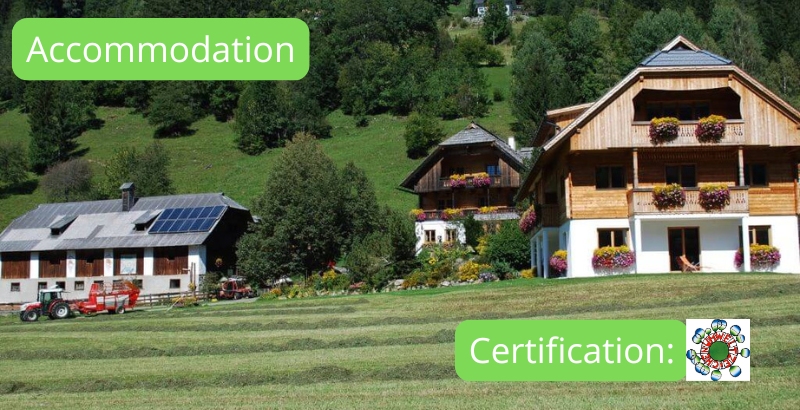
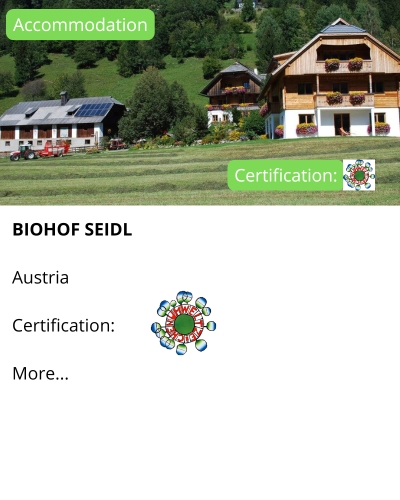
BIOHOF SEIDL
Typology: Accommodation
Selection criteria:
- Territorial location
- Integrated service offer
- Environmental commitment and certifications
Description: A small accommodation set in a house built and furnished according to strict environmental standards. All electricity comes from renewable sources, and the menu features produce from the property’s own organic farm.
Website: https://biohof-seidl.at/index.php?show=rundum
More details: https://destinet.eu/good-practices/etgg2030-sme-sustainability-best-practice-collection/biohof-seidl
Certified by Austrian Ecolabel for Tourism
Contact: Fichtl Otto otto.fichtl@vki.at
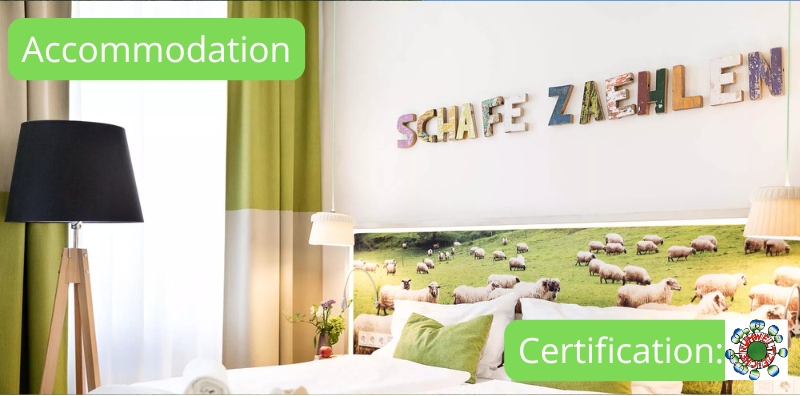
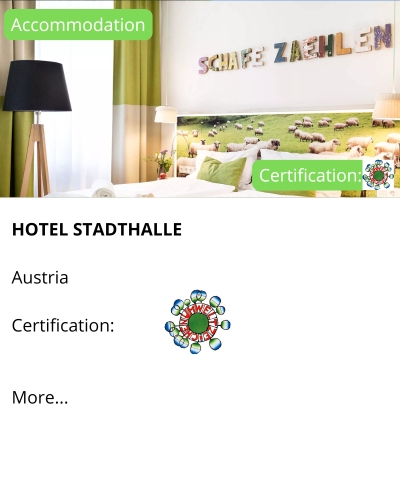
HOTEL STADTHALLE
Typology: Accommodation
Selection criteria:
- Environmental commitment and certifications
- Transparency and communication
Description: Boutiquehotel Stadthalle is a 79-room hotel located near the centre of Vienna. Environmental care defines both the hotel’s management philosophy and its public image, captured in the brand message “Green at Heart” — and backed up by a detailed account of how the hotel addresses each of the 17 UN Sustainable Development Goals (SDGs). The hotel holds the Austrian Ecolabel certification and has received several environmental awards at national and European level.
Boutiquehotel Stadthalle is Europe’s first zero energy balance hotel. Energy consumption has been reduced to the point where it can be fully covered by groundwater heat pumps, photovoltaic technology and the hotel’s own solar panels. Removing minibars alone saved 21,024 kg of CO₂ per year. The hotel actively promotes low-carbon transport, offering discounts to guests arriving by bike or train and encouraging the use of the city’s cycle lanes.
Food sourcing and procurement are handled with great care. All breakfast products are 100% organic, and local suppliers are preferred wherever possible. Fish consumption has been reduced and linked to sustainable marine ecosystem management. All cleaning products are microplastic-free. The hotel follows Zero Waste principles and applies a cradle-to-cradle approach to materials. Creative reuse of objects is reflected throughout the interiors, while eco shower heads and flow restrictors have cut water consumption by up to 35%.
As a city-centre hotel, outdoor space is limited — but greenery plays an important role. Courtyard walls are fully covered in ivy, and a lavender rooftop provides a habitat for bees and a source for honey, culinary dishes and scented sachets.
People-centred quality management relies on clearly defined processes that streamline work and improve collective performance, resulting in quality service, greater efficiency and a low-stress working environment. The hotel has also built several external partnerships — including a 2017 initiative with national and local bodies, fellow hotels and suppliers to tackle waste reduction across the hospitality industry.
Website: https://www.hotelstadthalle.at/
More details: https://destinet.eu/resources/certificates/austrian-ecolabel-for-tourism
Certified by Austrian Ecolabel for Tourism
Contact: Fichtl Otto otto.fichtl@vki.at
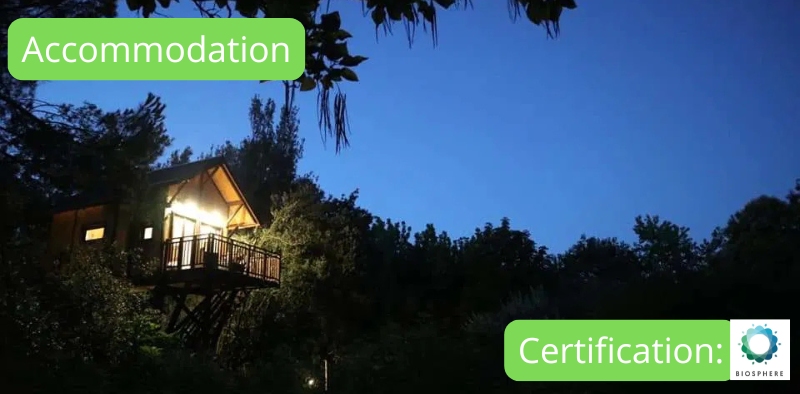
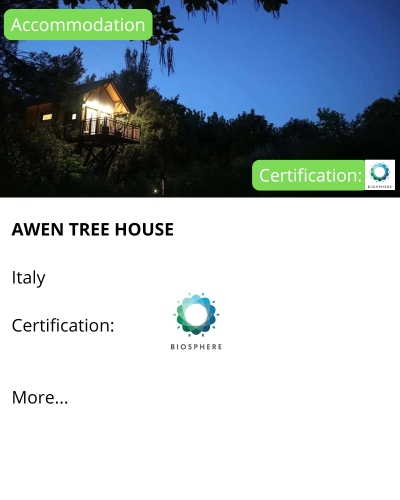
AWEN TREE HOUSE
Typology: Accommodation
Selection criteria:
- Business type and size
- Territorial location
- Environmental commitment and certifications
- Transparency and communication
Description: Awen Tree House offers self-catering accommodation in a unique structure built within a grove of evergreen oak trees. The experience is rooted in a philosophy of escape into nature — sleeping among the trees, away from the noise of technology. The property holds Biosphere certification in recognition of its environmental commitments. Waste is fully separated, and wastewater is filtered and recycled. Guests are informed about local wildlife and the surrounding natural environment, and bicycles are available to explore nearby natural areas. The property actively collaborates with WWF to combat illegal fishing and hunting.
The tree house is built with FSC-certified timber using bio-construction techniques, with thermal and acoustic insulation made from hemp fibre. This natural material is resistant to mould and insects, creating healthier living environments. It is fireproof, lightweight, fully recyclable and biodegradable. It is also carbon negative — capable of synthesising carbon and reducing CO₂ and other pollutants in the atmosphere. Hemp is additionally seismic-resistant and requires significantly less water than conventional building materials such as concrete.
Website: https://www.awentreehouse.com/vacanza-green
More details: https://destinet.eu/good-practices/etgg2030-sme-sustainability-best-practice-collection/awen-tree-house
Certified by Biosphere Sustainable
Contact: Patricio Azcárate Díaz de Losada padiaz@biospheresustainable.com
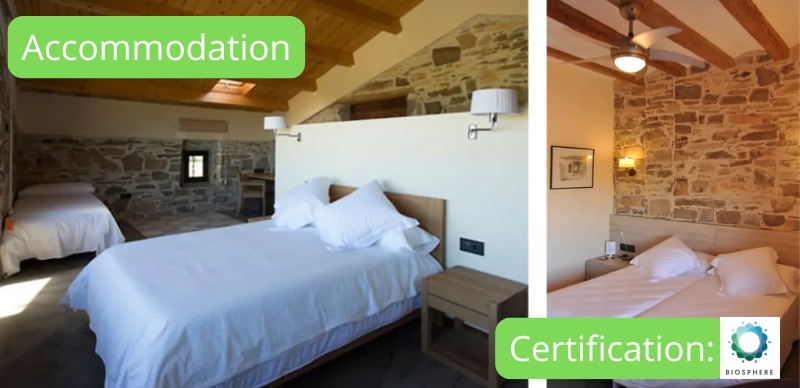
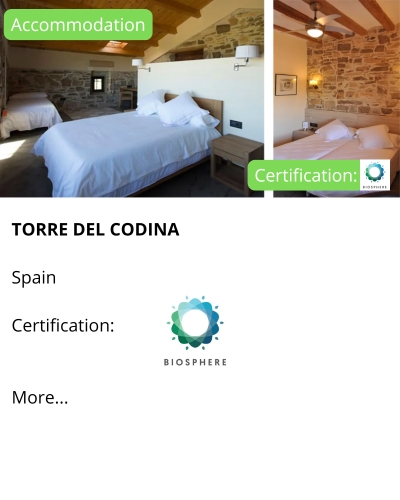
TORRE DEL CODINA
Typology: Accommodation
Selection criteria:
- Business type and size
- Territorial location
- Environmental commitment and certifications
Description: Torre del Codina is an independent rural property offering accommodation for fifteen guests across six bedrooms, set in a restored and converted 17th-century building. Ninety percent of the energy used is clean and renewable, drawn from a combination of wind, thermal, photovoltaic and biomass sources. Rainwater is collected and used for irrigation and to feed a wildlife pond, and is also filtered for use as drinking water.
Guests are encouraged to explore the surrounding area, rich in natural and historical interest. The property sits within an organic farm where wine tastings are offered and the production process explained. The farm is involved in the reforestation of a 12.5-hectare area, and during summer months owls and kestrels are reintroduced into the natural environment. The property is also an active partner in a local Leader programme and participates in a working group promoting ecotourism in the region.
Website: https://latorredelcodina.com/en/
More details: https://destinet.eu/good-practices/etgg2030-sme-sustainability-best-practice-collection/torre-del-codina
Certified by Biosphere Sustainable
Contact: Patricio Azcárate Díaz de Losada padiaz@biospheresustainable.com
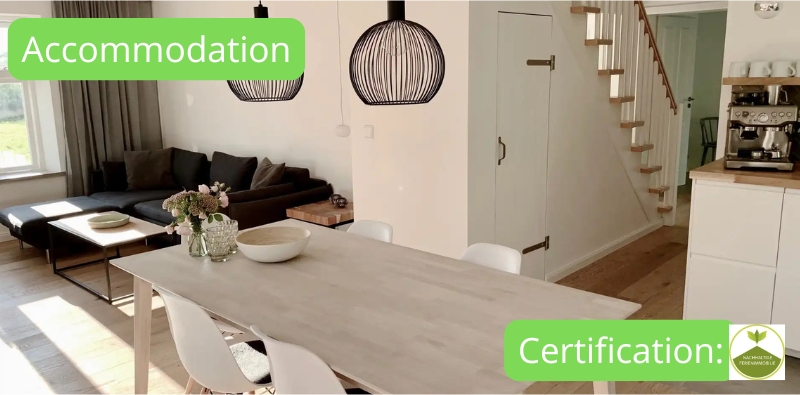
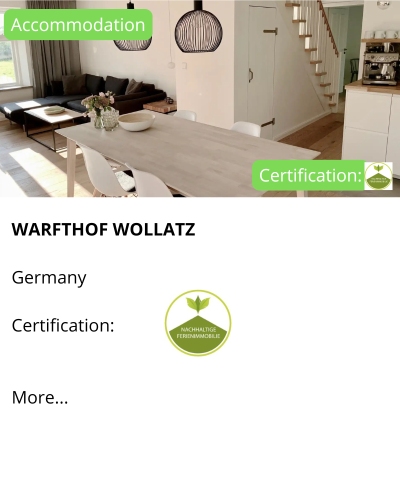
WARFTHOF WOLLATZ
Typology: Accommodation
selection criteria:
- Business type and size
- Territorial location
- Environmental commitment and certifications
Description: Warfthof Wollatz offers country-style rooms, rental cottages, and camping pitches on a working farm with crop cultivation and vegetable production, located on the edge of marshlands and tidal flats along Germany’s North Sea coast. A defining feature is its agricultural heritage and surrounding natural environment, which guests can actively experience. The farm is organically certified and managed according to Bioland guidelines. Numerous areas and activities are dedicated to enhancing biodiversity, including ponds, wildflower meadows, and tree planting. The farm provides a child-friendly atmosphere, with informal opportunities to interact with many animals.
Electricity is generated partly by 1,200 square meters of photovoltaic panels and partly by turbines harnessing strong coastal winds. Older wind turbines have been replaced with more modern technology, and the farm, together with its neighbors, operates three Enercon E82 turbines—enough to supply energy for more than 6,000 single-family homes. Wall-mounted radiant heating and earthen construction techniques allow for low flow temperatures. One of the houses is equipped with a geothermal heat pump. Charging stations for electric cars and e-bikes are available, and eco-friendly cleaning products and sustainable cosmetics are used in managing the accommodations.
Website: https://www.warfthof-wollatz.de/unser-hof/nachhaltigkeit-erleben
More details: https://destinet.eu/good-practices/etgg2030-sme-sustainability-best-practice-collection/warfthof-wollatz
Certified by Sustainable Holiday Residence
Contact: Jan-Hendrik Köhler-Arp Info@meaferias.de
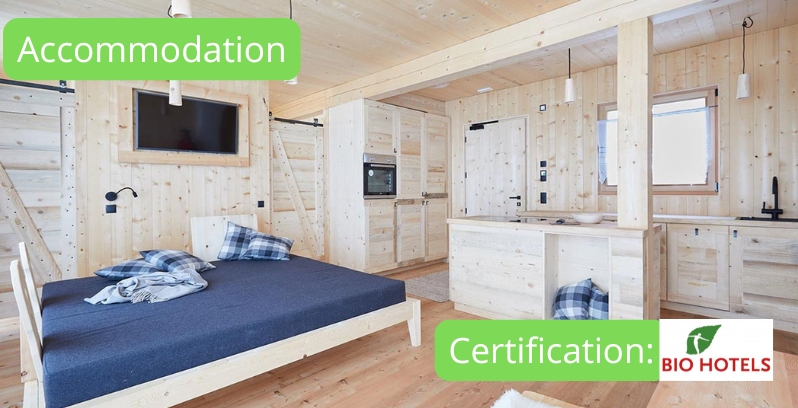
BLASLA HOF
Typology: Accommodation
selection criteria:
- Business type and size
- Territorial location
- Environmental commitment and certifications
- Transparency and communication
Description: Blasla Hof offers apartments and chalets, a natural cave pool, a sauna, and a hay bath, with a central stube serving a buffet breakfast and occasional dinners. Guests can take part in shared cooking activities and learning experiences, preparing local specialties such as canederli (dumplings).
The Bio Hotels certification requires careful management of energy resources and CO₂ emissions; accordingly, the property is climate-neutral and uses 100% green electricity. All products used are organic and locally sourced.
The structure has aimed to preserve traditional practices in both construction and furnishing. Natural materials are widely used, including wooden floors and furniture, stone walls, and aromatic Swiss pine (Zirmholz), as well as sheep’s wool and hay for insulation, textiles, beds, and pillows. Many objects are handmade and based on authentic South Tyrolean craft traditions. Purchasing products (eggs, milk, cereals, bread, honey, bacon, cured meats, vegetables, cheeses, herbs, juices, and wine) from a wide range of local farmers helps support and strengthen the regional economy.
Website: https://www.blaslahof.com/it/
More details: https://destinet.eu/good-practices/etgg2030-sme-sustainability-best-practice-collection/blasla-hof
Contact: Christian Pfanner, christian.pfanner@be-oh.at
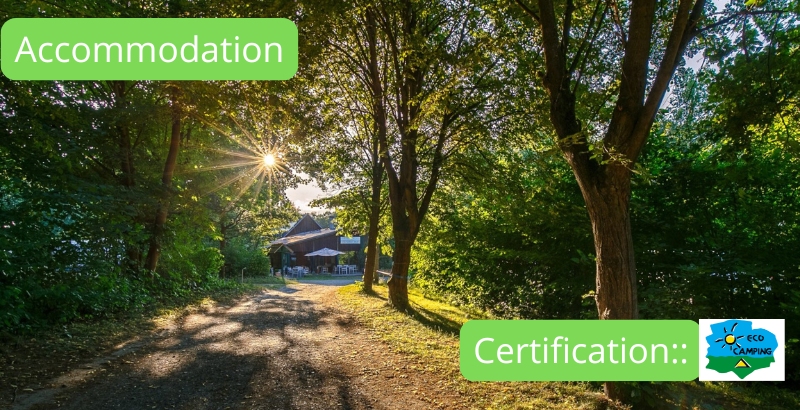
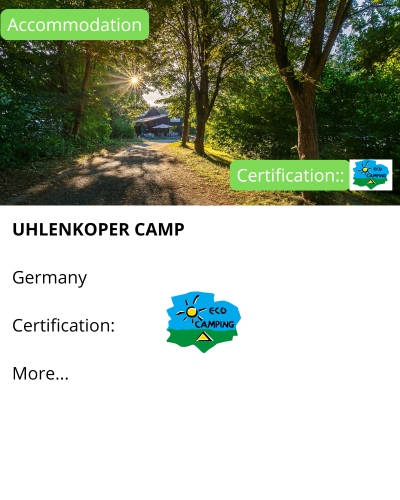
UHLENKOPER CAMP
Typology: Accommodation
Selection criteria:
- Business type and size
- Territorial location
- Environmental commitment and certifications
Description: The campsite generates its own energy independently and serves and sells exclusively organic products from regional producers. A new reception and bathroom facility, built in 2020, was constructed to sustainable standards using renewable materials and technologies designed to minimise consumption.
Website: https://www.uhlenkoeper-camp.de/
More details: https://destinet.eu/good-practices/etgg2030-sme-sustainability-best-practice-collection/uhlenkoper-camp
Contact: Wolfgang Pfrommer, wolfgang.pfrommer@ecocamping.net
UHLENKOPER CAMP
Typology: Accommodation
Selection criteria:
- Business type and size
- Territorial location
- Environmental commitment and certifications
Description: The campsite generates its own energy independently and serves and sells exclusively organic products from regional producers. A new reception and bathroom facility, built in 2020, was constructed to sustainable standards using renewable materials and technologies designed to minimise consumption.
Website: https://www.uhlenkoeper-camp.de/
More details: https://destinet.eu/good-practices/etgg2030-sme-sustainability-best-practice-collection/uhlenkoper-camp
Contact: Wolfgang Pfrommer, wolfgang.pfrommer@ecocamping.net
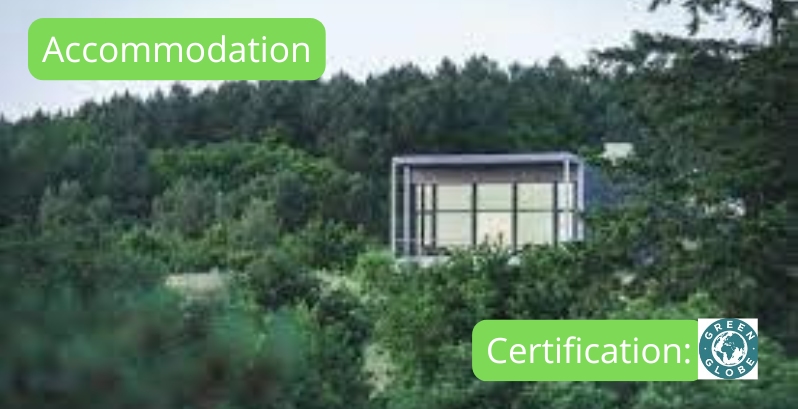
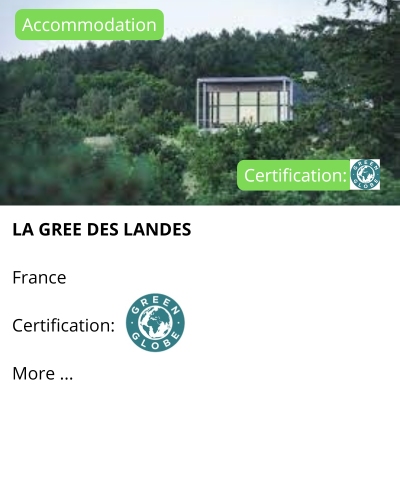
LA GRéE DES LANDES
Typology: Accommodation
Description: La Grée des Landes is a hotel and spa set in nature near the Brittany coast, defining itself as an eco-hotel built on respect for the natural environment — offering biodiversity, art, hospitality and relaxation in equal measure.
The building was designed to high environmental standards: its south-west orientation maximises the use of natural light, while green roofs and hemp wool insulation in the walls provide natural thermal regulation. Solar panels are installed on the rooftops, and boilers run on timber sourced from locally managed sustainable forests. Water is handled with particular care — water from the spa and swimming pool is recycled for use in toilets and garden irrigation, and low-flow shower heads reduce water consumption by 50%.
The French League for the Protection of Birds (LPO) has monitored the hotel’s grounds since its opening, conducting regular fauna and flora surveys. The data collected informs the hotel’s land management plan, which has had a measurably positive impact on local species, with a notable increase in the number and variety of birds, animals and insects. La Grée des Landes has also welcomed hospitality students to learn about sustainable design and management, as well as the use of local organic produce in the restaurant.
More details: https://destinet.eu/good-practices/etgg2030-sme-sustainability-best-practice-collection/la-gree-des-landes
Certification: https://destinet.eu/resources/certificates/green-globe-certification
Contact: Birte Pelayo, bpelayo@greenglobe.com
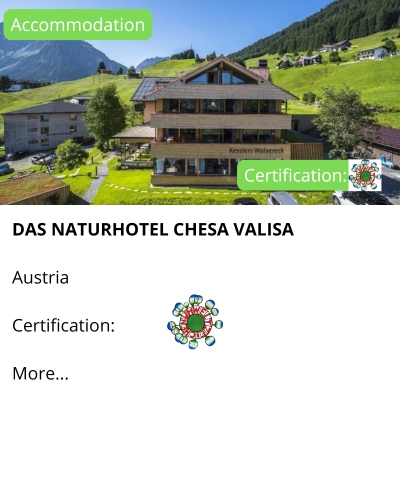
DAS NATURALHOTEL CHESA VALISA
Typology: Accommodation
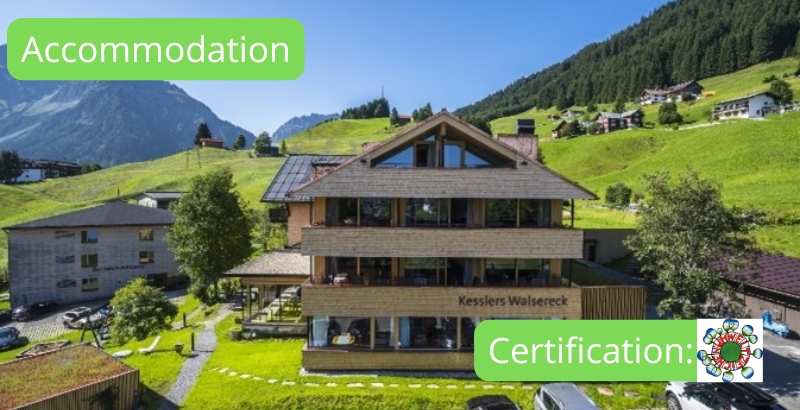
Description: Chesa Valisa is a hotel built on a close and enduring relationship with the nature of the surrounding valleys. The original building dates back to 1507, and the owners have sought to preserve its historical character while weaving in thoughtfully modern elements. Natural building materials — timber and rammed earth walls — create a healthy indoor environment, complemented by other natural elements integrated into the guest experience: water, through a steam bath and a small waterfall, and fire, in the form of a pressed clay fireplace.
The hotel runs on 100% renewable electricity and places great emphasis on organic and locally sourced produce. Equally central is the wellbeing of its staff: dedicated accommodation, catering, equipment, leisure facilities and additional benefits reflect a genuine commitment to a sustainable lifestyle for the people who work there. The hotel has also had a positive ripple effect on the wider community, encouraging several farmers in the Kleinwalsertal valley to convert their production to organic farming.
More details: https://destinet.eu/good-practices/etgg2030-sme-sustainability-best-practice-collection/naturhotel-chesa-valisa
Certification: https://destinet.eu/resources/certificates/bio-hotels
Contact: Christian Pfanner, christian.pfanner@be-oh.at
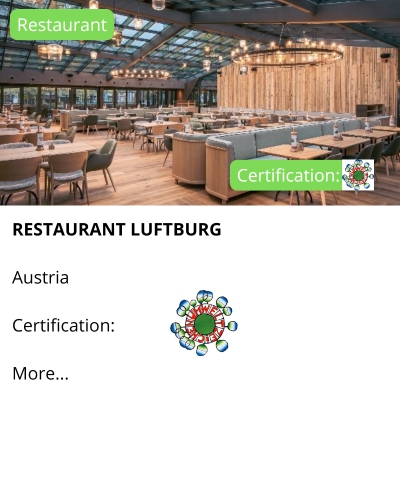
RESTAURANT LUFTBURG
Typology: Restaurant
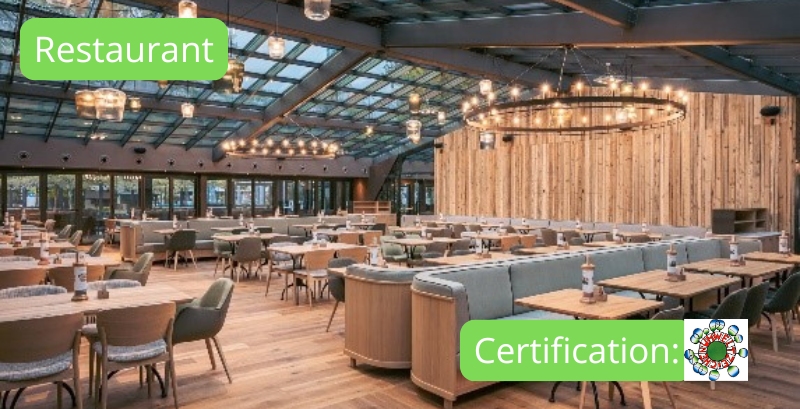
Description: Luftburg describes itself as the largest fully organic-certified restaurant in the world. Located in Vienna’s green Prater area, it manages its outdoor space with care to support local biodiversity. Energy is partly supplied by photovoltaic panels, and ventilation and refrigeration systems make use of heat recovery, with a long-term goal of transitioning to 100% renewable energy. Waste separation, recycling and minimal water consumption are central to operations, supported by regular staff training.
The team, together with its suppliers, makes a considerable effort to ensure that 100% of all food served is organic-certified. The only beer on offer is a locally brewed craft beer made from organic barley and malt. Used cooking oil is converted into biodiesel, and guests are encouraged to take home unfinished food in biodegradable containers.
Luftburg also pursues an active inclusion policy: for years it has employed asylum seekers, supporting them in learning German and integrating into local society. Jobs have also been created for people with specific disabilities, each supported by a dedicated personal tutor.
More details: https://destinet.eu/good-practices/etgg2030-sme-sustainability-best-practice-collection/restaurant-luftburg/
Certification: https://destinet.eu/resources/certificates/austrian-ecolabel-for-tourism
Contact: Contact: Fichtl Otto otto.fichtl@vki.at
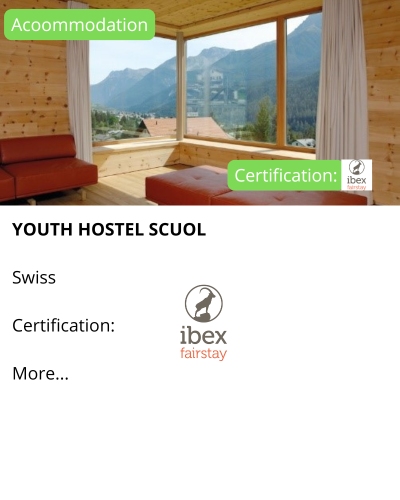
Typology: Accommodation
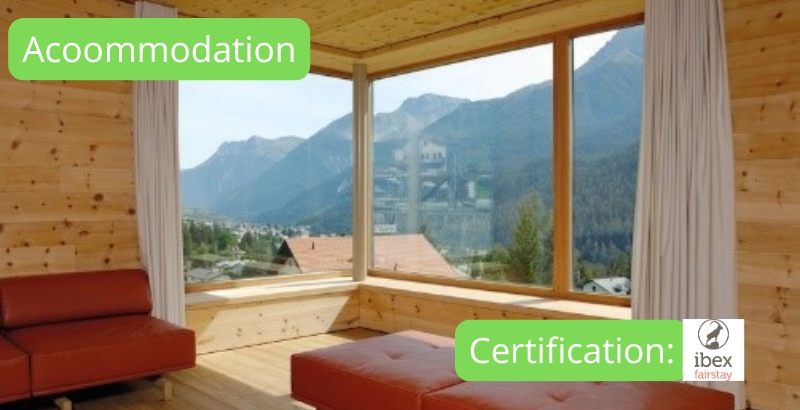
Description:Scuol Youth Hostel is one of over 50 hostels managed by Swiss Youth Hostels, offering 164 beds in rooms of two to six. Environmental principles have guided the hostel from the construction phase through to its day-to-day operations. Since 2010 it has held the IBEX Fairstay sustainability label, reaching the top “Platinum” level in its most recent certification, and has received several awards for ecological architecture and technology.
The building was constructed to Switzerland’s highest energy standards. The ECO label certifies the exclusive use of environmentally responsible building materials, while the Minergie construction method ensures minimal energy consumption during operation. Efficient appliances, a heat pump heating system and solar collectors for hot water keep energy use and CO₂ emissions to a minimum — the 27 m² solar installation saves around 15,000 kWh per year. All electricity comes from renewable hydropower. The hostel’s carbon footprint is significantly below the already low Swiss hostel average of 5.5 kg per overnight stay.
Guests can offset their CO₂ emissions through Myclimate and contribute to local sustainability initiatives, with Swiss Youth Hostels doubling every contribution. The hostel’s location — within walking distance of the train station, bus stops and cable car — makes it ideal for guests travelling by public transport. The menu features vegetarian and vegan options alongside sustainably sourced meat, and guests are actively encouraged to explore the surrounding natural environment.
From the earliest planning stages, the hostel developed close partnerships with regional and local stakeholders, including the railway company, the municipality and the local tourism board. A particularly meaningful collaboration was established with the regional farmers’ association, which made the former livestock market site available for construction. In return, the hostel sources as much local produce as possible and prioritises hiring farmers, especially during winter when fieldwork is scarce. Equal opportunities and equal pay for men and women are guaranteed, with a strong focus on barrier-free accessibility.
Swiss Youth Hostels maintains strong ties with local, regional and national organisations and aims to set an example of sustainability in the tourism sector. It also plays a leading role within Hostelling International, a network bringing together 63 youth hostel associations across 81 countries.
More details: https://destinet.eu/good-practices/etgg2030-sme-sustainability-best-practice-collection/youth-hostle-scuol
Certification: https://destinet.eu/resources/certificates/ibex-fairstay
Contact: Contact: Anita Gschwind agschwind@ibexfairstay.ch
